
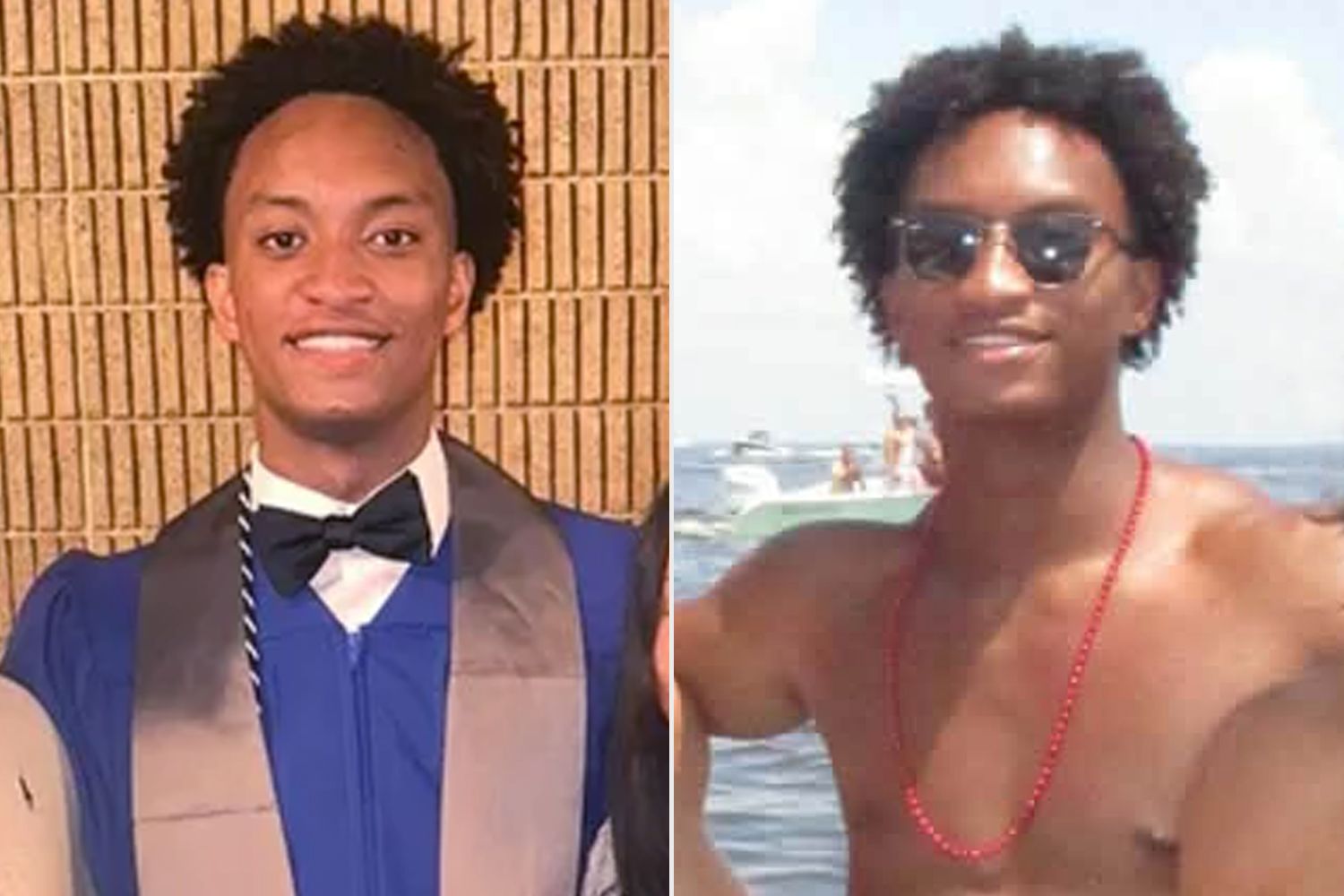
Before Nolan Xavier Wells became a national headline, before his death sparked questions about race, before social media began dissecting what may or may not have happened on Horn Island, he was someone’s son.
He was 18 years old. He was a student-athlete. He had a family who expected him to come home after a Fourth of July outing with friends. Instead, two days after he disappeared, his body was found, leaving his parents with the kind of question no mother or father should ever have to ask: What happened to our child?
As details surrounding Wells’ death have emerged, the story has become about many things. It has become about race. It has become about Mississippi’s history. It has become about conflicting accounts, questions surrounding the investigation, and suspicions about what happened during the final hours of his life. Nolan was Black, and the friends he had been traveling with were white, a dynamic that has contributed to racial concerns and intense public scrutiny. His family has repeatedly called for a thorough and transparent investigation, while an independent autopsy was commissioned as they continued searching for answers.
Those questions matter. Truth matters. Justice matters.
But somewhere in the rush to determine what Nolan’s death represents, there is a danger of forgetting who Nolan was.
He was someone’s baby.
A Mother’s Question Is Much Simpler
At a news conference following her son’s death, Nolan’s mother, Christine Wonsley, distilled the family’s anguish into words far simpler than much of the debate surrounding the case: “We just want to know what happened and why our baby didn’t come home.”
There is something about those words that cuts through everything else.
As a mother raising a little boy who will one day become a man, that sentence lands differently.
Every mother who looks at her son sees more than the person the world will eventually see. She remembers the baby she carried. The little hand she once held crossing the street. The first day of school. The scraped knees. The birthdays. The things that make him laugh. The things that frighten him. The dreams she has quietly carried for his future.
And as that little boy grows, the prayers change.
You pray that he makes wise decisions. You pray that he chooses good friends. You pray that people treat him with kindness. You pray that when he walks out of your door, the world sees the humanity in him that you have seen since the moment he entered it.
A father carries hopes too. He imagines the man his son will become. He teaches him, corrects him, protects him, prepares him, and eventually has to accept that the little boy he once guided by the hand must navigate a world his parents cannot always protect him from.
Perhaps this is what makes Nolan’s story bigger than another headline.
Somewhere, two parents sent their son into the world expecting him to return.
He didn’t.
Before Race, There Is Humanity
It would be dishonest to pretend race has not become part of the conversation surrounding Nolan’s death. America’s racial history—and Mississippi’s particularly painful history—makes certain questions understandable. When unexplained tragedy involves a young Black man, historical memory inevitably shapes how some people interpret what they see.
But acknowledging that history does not require us to decide what happened before the evidence does.
Scripture offers an important warning in Proverbs 18:17: “The one who states his case first seems right, until the other comes and examines him.”
That is particularly relevant in the social-media age. We no longer wait for investigations. We investigate from our phones. We assign motives, identify villains, construct timelines, and sometimes pronounce judgment before the people actually responsible for investigating a case have completed their work.
Christians should be different.
We can ask hard questions without manufacturing answers. We can demand justice without abandoning truth. We can acknowledge racial realities without automatically assigning racial motives where they have not been established.
And we can remember that every person involved bears the image of God.
Genesis 1:27 tells us that humanity was created in God’s image. That truth predates race, politics, nationality, and every category through which we divide ourselves.
Nolan bore God’s image.
His grieving parents bear God’s image.
The young people whose actions are being scrutinized bear God’s image.
That does not remove accountability. It establishes the standard by which we pursue it.
Justice and Love Are Not Opposites
Our culture often behaves as though justice requires hatred.
Someone must become the enemy. Someone must be destroyed. Someone must pay—not simply if evidence establishes wrongdoing, but because our anger demands somewhere to land.
Biblical justice looks different.
Micah 6:8 calls God’s people “to do justice, and to love kindness, and to walk humbly with your God.”
Notice what Scripture refuses to separate: justice, mercy, and humility.
We can want every question surrounding Nolan’s death answered. We can insist that his family deserves transparency. We can expect investigators to follow evidence wherever it leads.
But humility also requires admitting what we do not yet know.
And love requires remembering that tragedy should never become entertainment.
What If We Actually Loved Our Neighbor?
Jesus gave humanity an instruction so familiar that its radical nature is easy to overlook: “You shall love your neighbor as yourself” (Matthew 22:39).
Imagine applying that command to the way we discuss cases like Nolan’s.
If Nolan were our son, we would want answers.
If Nolan were our brother, we would want investigators to take every question seriously.
If the young people being accused online were our children, we would want evidence established before strangers condemned them.
Love does not ask us to ignore truth.
Love asks us to care about truth for everyone.
Perhaps that is something our culture desperately needs to recover.
We have become extraordinarily good at choosing sides and remarkably poor at seeing people.
As the Investigation Continues
The investigation into Nolan Wells’ death remains ongoing, and his family is still seeking answers about what happened in the final hours of his life. That matters. Christians should care deeply about truth, accountability, and justice—but we should also resist the temptation to reach conclusions before the evidence is complete.
There may be more information to come. There may be details that change how the public understands this case. Until then, the most faithful posture is one of humility: ask questions, pursue truth, pray for the family, and refuse to let speculation outrun the facts.
Whatever the investigation ultimately reveals, one truth is already certain: a young life was lost, and a family is grieving.
A Life Was Lost
There will be time for evidence. There will be time for investigative findings. If wrongdoing occurred, there must be accountability. If assumptions prove false, truth must matter then too.
But before Nolan Xavier Wells becomes another symbol in America’s endless racial and political arguments, Christians should be willing to stop long enough to acknowledge the simplest truth of all.
A young man died.
A mother lost her son.
A father lost his son.
A family had plans for a future that will now look completely different.
And whatever ultimately emerges from the investigation, nothing will return that future to them.
Perhaps the Christian response begins there—not with speculation, but with compassion. Not with choosing a side before the facts are known, but with choosing truth. Not with pretending race and history do not matter, but refusing to allow those conversations to strip anyone of their humanity.
We should pursue justice.
We should demand truth.
We should ask difficult questions.
But we should do all of it while remembering the command Jesus placed above nearly everything else: love your neighbor.
Because long before Nolan became a case, a controversy, a hashtag, or a debate, he was a human being made in the image of God.
And before he was any of those things, he was someone’s son.